Psycho. #64
Football.
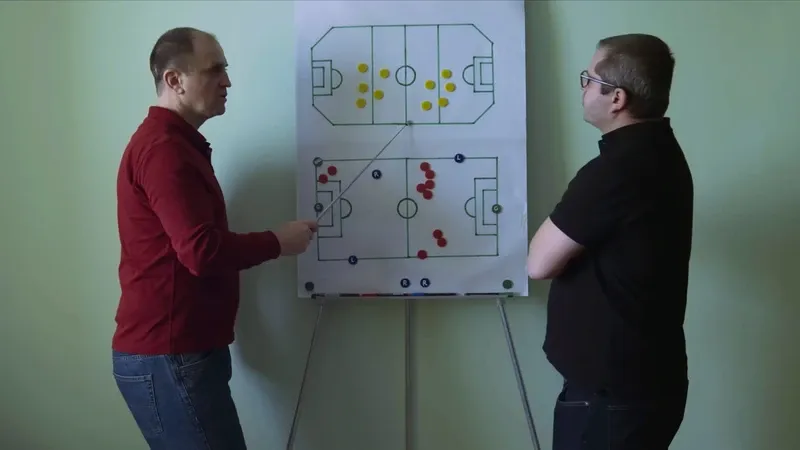

Mate, are you seriously saying Arteta isn’t responsible for our current form?
Gosh! Interesting to see a football fan barging in here, our hallowed cinema safe space, with this confrontational attitude, much like the ‘hooligans’ I remember well from news reports in my childhood. I used to come to the UK on holiday in the 1980s and vaguely wonder if somebody might throw a chair at me at some point if I went too near a pub. Who here remembers ‘yobs’? Those were the days. In the current era, you can find the cultural secretary bending over backwards to welcome violent criminals to our streets. Perhaps there could be a happy medium, somewhere between condemning working class people and extending an olive branch to fascists? Just a thought.
A little bit of context is due, for the faithful readers who will have no idea what this question alludes to. On my social media last week, I lightly poked fun at the conversational style of three straight men who came to the restaurant where I work, and who – within mere minutes of sitting down and getting the pints in – got right down to the business of racking up football commentary clichés. One of them said to the others, with no trace of irony or self-mockery, “Before we used to get through games… now we’re winning them. Because Arteta [the manager of Arsenal football club]...” and then another of them jumped in with, “Mate… Arteta’s world class.”
Now. A few things are going on here, and I would like to address them straight off, before seeing if I can find a way to bring this round to cinema, which is what this column is ordinarily about. First off: it should be a point of amusement to everyone that discussions are actually conducted like this. These are the kinds of empty gambits I would come up with as a pisstake of unsocialised men desperately grasping onto the only conversational life-jacket they can see for miles and miles around. I don’t even pay attention to football, but I do know that Arsenal football team are top of the league, and therefore it seems fairly evident that they are currently winning games. The team that won the most games wins the prize – that’s how it goes. I would go further: it is also so obvious that the winning team’s victories are due to their having a good manager, that I would be embarrassed to say so. And one more thing: “we”?
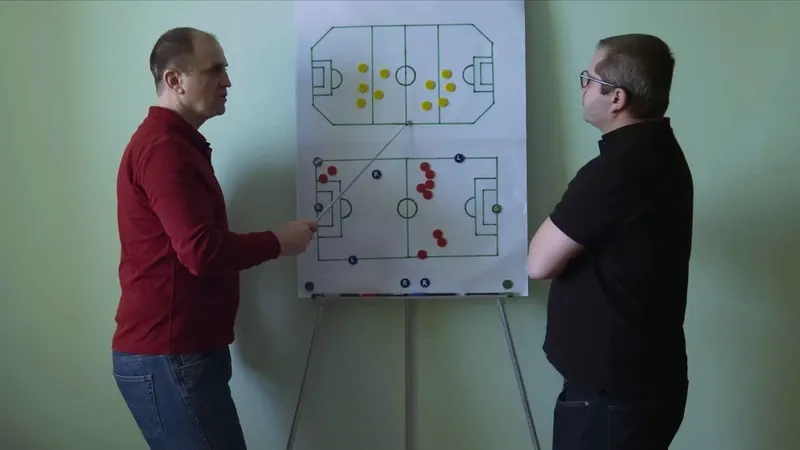
I’m always amazed at the “we” that football fans adopt to talk about their favourite team, even though they are obviously not involved in any way, and in any case every football team in the league is an exemplar of the Ship of Theseus paradox. Saying “we” about Arsenal, in cinema terms, would be like my adopting the awards campaign of the film It Was Just An Accident, and saying, for instance, “Oh mate… we swept the Gothams last night. Reckon the Oscars are a safe bet for us if we can make a good showing at the SAG awards. All to play for I reckon. Panahi will see us through.”
Hello?? I didn’t make this film I like, and you didn’t score the winning goal last weekend, are you absolutely mad??!
Obviously a few things are happening here. First off, I accept that this is a question of fellowship, principally for men, who wish to bond with one another – and I suppose this common language, its ease of access to those who wish to participate, must come as some kind of relief. Here it is, this easily grasped shorthand, which telegraphs community and won’t be judged, except by vicious little gay waiters eavesdropping on your bants. I know that some men find it hard to talk about feelings and, you know, anything at all, so I get that it’s useful to have this subject to hand. All of us reach for these kinds of quick fixes: on Saturday I found myself stuck near the queer equivalent of this as I queued for a gay club next to five men in their twenties who, it seemed to me, in the entire 20 minutes we shivered outdoors together, communicated to each other exclusively in RuPaulisms and tongue-pops. The sound was quite mesmerising, really, like a kind of made-up babble that you might instruct extras to murmur to each other as a backdrop to a break-up scene in a gay bar on Netflix.
I don’t know if I have these codes so readily to hand, but it’s true that early on in my life I sought out cinephilia as an interest and tried to master all the cues and terminology that come with it. I see my children reaching for some of that language now, as they get older and become savvier viewers: now, rather than simply go crazy for a film that goes whoosh, they are a little more able to talk about individual scenes, rhythm, performances, jokes. That sense of confederacy is potent, and there is a real pleasure in being able to agree to the same terms. I notice this all the time in the restaurant where I work: that my colleagues and I co-create a language specific to us, to our work, which doesn’t just help us do the job, but which binds us in some way.
But. But! I’m afraid to say that the film equivalent of saying “before we were getting through games, now we’re winning them” is “I thought it was pretty good but I saw the twist coming.” Or: “you know what? Die Hard is actually a Christmas movie if you think about it.” Or: “Why were all the characters so unlikeable?” This is basic stuff, my guy. Do you know the Armando Iannucci sketch in which he tries to ingratiate himself to other men by resorting to football chat? It’s a wonderful segment from a brilliant show, cancelled too soon. (My friend Sophie once bought it for me on DVD as a birthday present, then we watched three episodes of it together and she retracted the gift, deciding to keep it for herself) And what the sketch does is show how stooooopid most sports discourse is. Perhaps the idea is to test how much idiocy people can actually bear to spout in the name of their hobby: a really sick, twisted version of gatekeeping; a Freemason’s code, but instead of a special handshake it’s dribbling down your t-shirt. Such is the price to pay for belonging to the straight mainstream!
Of course I think the manager of your team is key to your team’s success! That was never in dispute! In film terms – really, thank you for writing to a film newsletter with this dilemma, thanks a lot – this brings us back to auteurism, and the greatly contested question of who, in a movie, can claim artistic responsibility for it. Are the defenders, in capturing the ball and sending it up the midfield, for the guy in a roving position there to hoof it to a striker and net a fat one for the Goon squad, artists? Sure, by the same token that an actor seizes on something in a screenplay, creates a role, gives a scene partner something to play with and build on: the performers contribute, but it would be hard to say that they have authorship over the material. In my view, it’s the person who writes the script, chooses and positions the actors, and shapes the action in a million different particulars, who is to be credited for the overall result. This seems evident to me, although of course individual moments of brilliance are allowed to, and do, flourish at intervals in the show itself.
I suppose film and football both thrive on differently calibrated forms of fandom, which upholds the star system and keeps the industry afloat. But in the case of cinema, I think there can be – should be greater variety in the stories we see, in the encounters staged; and our language must be concomitantly rich, while making itself welcoming to newcomers, for film to survive in this big bad buzzing world.
Send your questions anonymously to Caspar at this link, no personal information is collected.