Psycho. #65
Happy Lisa Kudrow year!
You recently predicted that Lisa Kudrow is “in” for 2026 — can you explain this, and also why she’s never had a film breakthrough?
I can explain this, and that, and thank you very much in passing for sending in this question. This is an issue that, in my view, cuts right to the heart of the ongoing tug of war between TV and cinema, but it also has to do with actresses in general, and how they are perceived in our culture.
Let me take you right back to the year 1996, when I, a questing young cinephile – picture him, reading his film mag on a train, how hopeful he looks, what dreams he has! – first found out about the television show Friends. In my French film magazine (not Cahiers, I should add, but some Empire-style thing that did silly bits and interviews) there was a segment that month about some new young actors on the block who were expected to soon “break through” into cinema in a big way. One of them was Michael Rapaport (?) and yet another one was a certain David Schwimmer (??), who, out of the cast of a new TV show that was going gangbusters Stateside, was – according to this publication – most expected to become a movie star. Sorry… Ross???
Not sure where Premiere magazine got their insider scoops at the time, but Michael Rapaport went on to appear in about fifty films nobody has heard of, get a criminal record for harassing his girlfriend, become a prominent asshat on the internet and then rebrand as a big old zionist at the worst possible time to do so (2023 - ?). As for David Schwimmer, there’s no kind way to say that he was never set for big screen stardom. He is a nice man with a rubbery face, and a lovely presence too, on the small screen, playing a hapless schlub. Indeed, he was last seen in that persona in one of Ryan Murphy’s crimes against humanity, burbling “Juice… Juice??” to Cuba Gooding Jr’s O.J. Simpson.
But at the time, the question of which of the Friends would be the one to make it on the big screen was one that concerned a lot of people, and all of them had a bit of a go at it, with mixed success. Jennifer Aniston has, I suppose, after appearing in a number of romcoms with some success at the box office, been the more obviously successful of the bunch – but Courteney Cox had a big popular hit with Scream; meanwhile, Lisa Kudrow seemed to be doing pretty decently for herself, appearing in a number of well-regarded indie films and in supporting roles in the odd box office hit, such as Analyse This!. There were flops, too, along the way – and I think the Friends never really succeeded in straight drama, although of the six of them Kudrow is clearly the more gifted in this register.
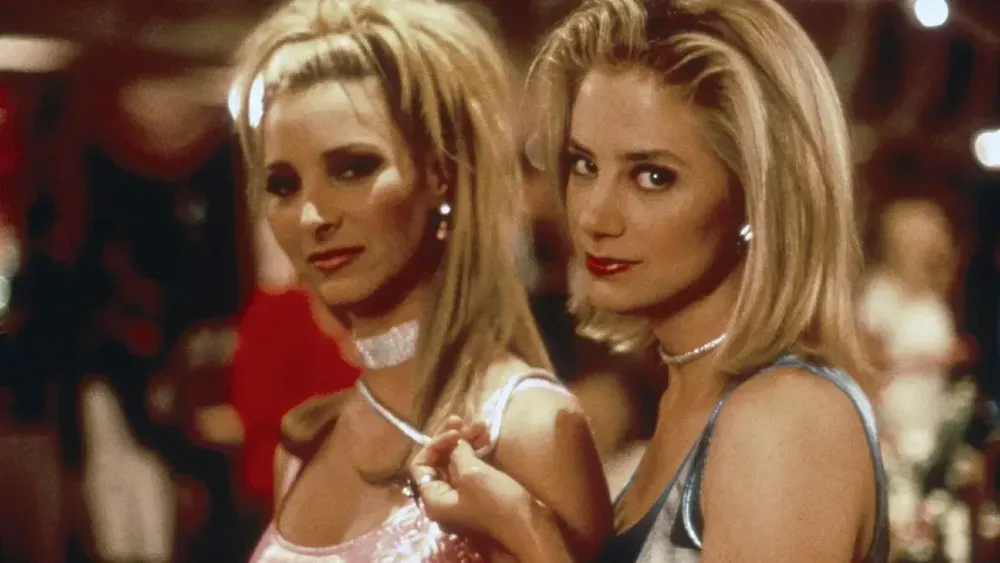
The stardom of these guys is televisual. No cinema successes, or indeed failures, are attributable to them, because they have no cinema screen persona to speak of – although, again, I believe Kudrow to have the chops for it, since I consider her to be one of the great actors of our time. Courteney Cox went back to the small screen, in Cougar Town, and so eventually did all of them, right down to Aniston who can now be found in The Morning Show alongside a movie star (Reese Witherspoon) who has cleverly branched out into the industry with the money and steady work. These people are not movie stars, even though they do have a star persona; they should instead, and some of them could still, be character actors or work in indies.
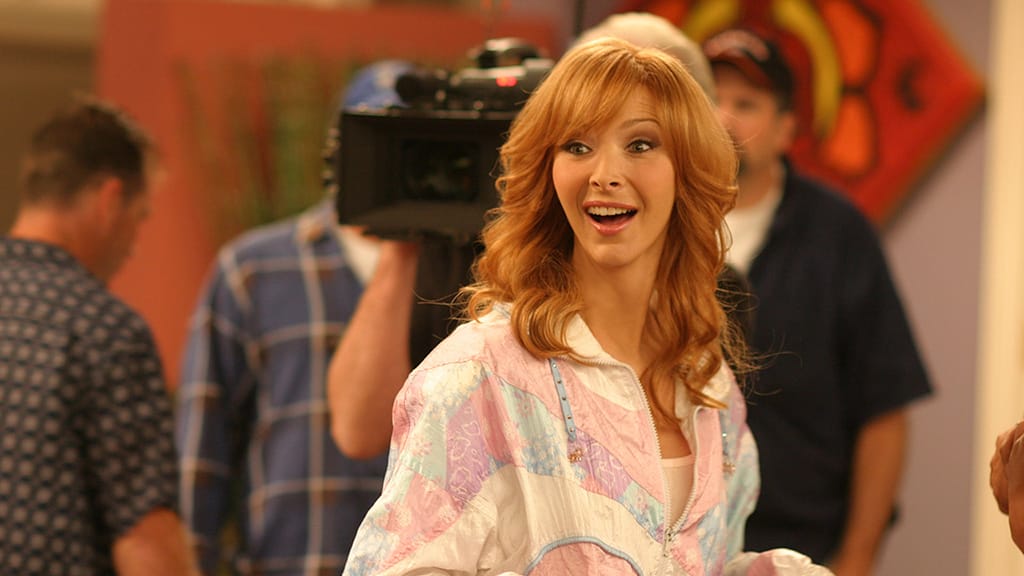
Kudrow is terrifically bubbly and fun in Romy and Michele’s High School Reunion, acidic and drawling in The Opposite of Sex (winning the New York Film Critics Circle Award for Best Supporting Actress), gave an underrated turn in Wonderland, and has scene-stealing cameos in the Bad Neighbors films. Crucially, though, her genius is most adapted to the small screen, which was always a different format to cinema and should always be recognised as such. Her masterwork, of course – and still so tragically underrated – is The Comeback, which she produced and co-wrote, and which is coming back for a third season in 2026. The show features one of the great small screen performances of my lifetime, perhaps even the greatest, a monument of acting and characterisation. After spending her heyday on the most successful show in the world, the big joke of The Comeback was that Kudrow was playing a washed up has-been – the tragically blinkered and ridiculous Valerie Cherish – trying to taste some public success on a new TV show, and desperately failing.
Over the course of two seasons, Kudrow crafted somebody wholly believable, down to her every move, a woman painfully sacrificing her dignity and wellbeing in the service of fame and money. In the second season the show began to extend a little mercy towards poor Valerie, but in the first season it’s striking how unyielding the programme is, and how utterly ruthless and unblinking Kudrow is in her depiction. Her voicework is extraordinary, every aspect of her performance true and right; but it’s especially in the discomfort that she mines, in those scenes where you seem to see how torn and desperate Valerie is, that Kudrow really excels. Her silences are magnificent, in their vulnerability, in their steeliness too; and as a result of her continuing humiliations she carries on her act of being bright and happy and in charge of her fate. Jeremy Strong in Succession, Bryan Cranston as Walter White, do not produce a more committed show of acting than this; but Kudrow lost the Emmy to Julia Louis-Dreyfus in a show nobody saw, in The Comeback’s first season, and in its second lost to JLD again. Now, Julia Louis-Dreyfus is a fine, fine comic actor of the small screen. I defer to nobody in my appreciation of her work on Seinfeld. But Lisa Kudrow could do what Louis-Dreyfus does in Veep, whereas Louis-Dreyfus could never do The Comeback.
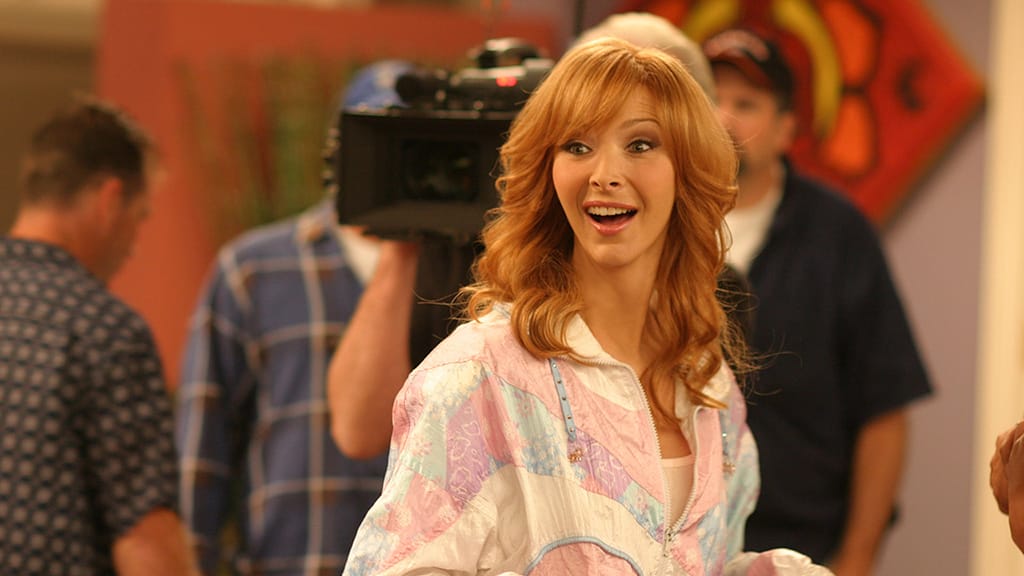
Kudrow is now recognised, I think, as one of the comic greats, but her time never came – and this is because she doesn’t fit into an easy mould. I think of her as I do other comedic greats, such as Teri Garr, Parker Posey, or Madeline Kahn; you could even add somebody like Shelley Duvall to those names. I suppose at least Parker Posey had a serious impact as the “queen of indie” in the 90s, before finally answering to the call of The White Lotus. But these women who are all funny and smart as hell, who want to scratch away at their character’s humanity, who can turn up the intensity if needed, and who aren’t sexy little playthings, were always going to struggle for recognition and for vehicles that served their talents well. I truly think that cinema could not handle their likes, not properly, because it didn’t understand female stardom beyond sexuality and pliability. Television could welcome a dame such as these though, because it allowed characters to develop over time, and to make their way into our affections.
Kudrow worked hard for that, and used her clout to make a small screen gem, which could not work in cinemas: something fiercely intelligent, which foxed the networks and critics and is still only just coming into the role in the culture that it always merited. When Kudrow dies the obituaries will lead with Phoebe, but what she leaves us with, her gift to us, is Valerie. No need for a film breakthrough; the work will out.
Send your questions anonymously to Caspar at this link, no personal information is collected.