Psycho. #67
Time travel.

My terrible film-goer secret is that I don't get John Cassavetes. I 'get' the directors who are influenced by him — there are so many it's impossible not to. However, I find the source himself really saccharine and, at the same time, oddly distancing. Please tell me off in your inimitable style/explain gently what it is that I'm missing out on!
It’s an intriguing question! I’m going to start with a moment of quite radical honesty however, such as you probably never see from other critics, when I confess to you that – cough – I am not so big on Cassavetes myself; or, rather, that I haven’t seen enough of his work to come up with a firm enough opinion.
I often wonder what other critics’ blindspots are! It’s simply impossible, particularly in these days when being a critic alone pays the bills of so few people, for most reviewers to have seen everything. You would have to be so single-minded and committed in your pursuit of a total overview of cinema, and work at practically nothing else, and have so little writing to do alongside your viewing, that it seems to me extremely likely most reviewers and cinephiles now are hiding a few big gaps. I like to think of this as “the Letterboxd dilemma”: why would I reveal to thousands of people that, from my lofty perch whence I preach about film, I am seeing a number of Kurosawa films for the first time?
I had a pretty culture-intense upbringing, in which books, not films, were seen as the thing to get through – and so I became pretty well-read by early adulthood. I watched films as well, and got a decent enough grounding in, ooh, Spielbergs and Rob Reiners and Kubricks and the odd classic – Singin’ in the Rain, Some Like It Hot, The Third Man. I developed an interest in cinema and racked up a bunch of Almodovars and Ken Loaches, a bit of Nouvelle Vague, the odd Kiarostami and Wong Kar-wai, The Sweet Hereafter, Burnt By The Sun, a smattering of Italian greats. I came very late to Fassbinder, Powell & Pressburger and Ozu. What I’m saying is, there’s always going to be one or several areas where film reviewers are lacking – it simply has to be the case. Why don’t they say it!
I read online, many years ago, about a writer – I think it was Balzac – who was supposed to be astoundingly well-read. This guy’s reading list ran from Pliny, Herodotus and Horace to all of Shakespeare, via, I don’t fucking know, La Fontaine and Rabelais. He could recite Homer and the Bible and, let’s say, Keats. At the time I thought to myself, well, god damn it, I’ll never have that erudition; but of course, what I neglected was that these were different times, with a far greater emphasis on reading and scarcely any competition for people’s interest from sport, none from cinema or the web or TV. Those things having entered my life, perhaps I’m not doing so badly having cobbled together a personal pantheon from Jane Austen to Nanni Moretti via Too Many Cooks, Succession, the music of Cole Porter and Kate Bush, etc etc.
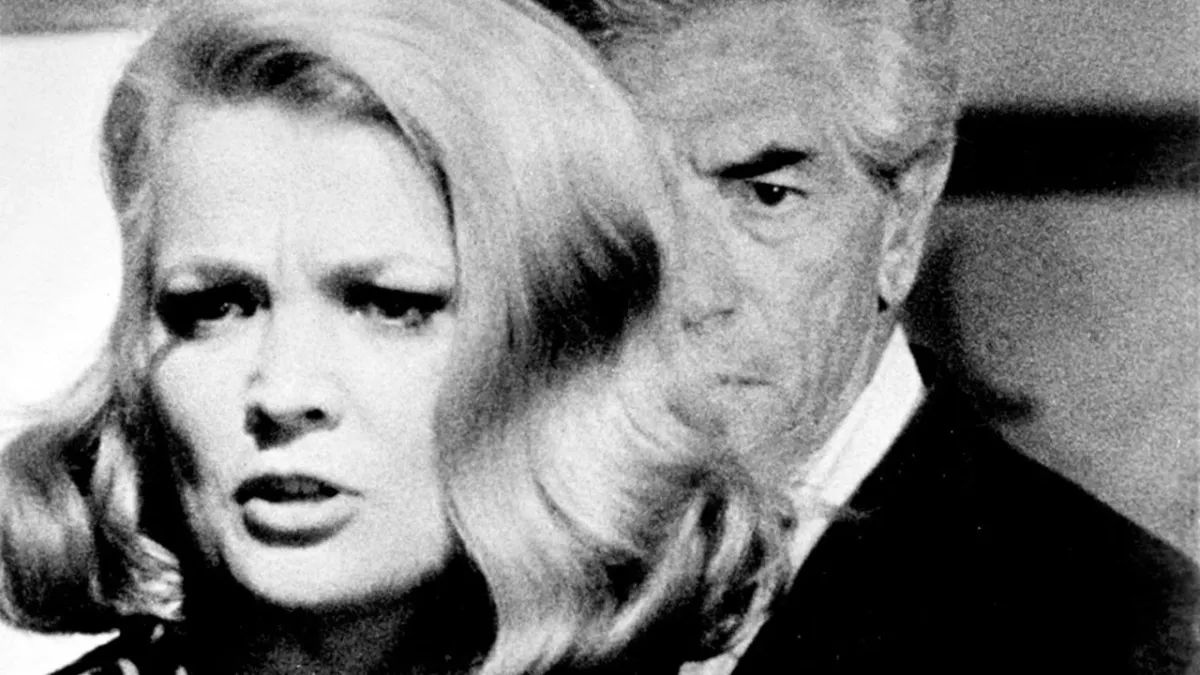
Cassavetes is still a project for me, and what I have seen I enjoyed well enough, although I know what you mean when you talk about something within you that resists his style. I suppose it’s a little like looking at early drawings of the Simpsons before they were fully formed as we now know them: the idea is there, but there’s something a little gauche in the execution, and their sheer novelty is contained within them, and kind of sweats out of their every pore. Looking at Gena Rowlands improvising, I’m reminded what a great actor she is, because of her commitment and her versatility, her fire; but I can’t deny that I also see the process. In Faces – a film I quite liked! – I found the opening scenes almost painful because the improvisatory quality of the dialogue and the performances, from Rowlands, John Marley and Seymour Cassel, seemed too fumbling and artificial. You can hear the sentence endings where the characters speak over each other, because they are keen to cover silences; and the camera cannot immediately take its cue from this novelty. That gives a slight sense of staleness to proceedings even as – and this is the weirdest thing – you sense that you are experiencing something that is at heart quite vital and exciting.
I think that the bigger question behind your question may actually be to do with how we manage to time travel, what it takes for us to put things back into context and read them for what they are – objects in time, absent their reputation. I’m reminded of watching clips from tennis players in the 1960s and 70s – how flatly and feebly they hit the ball, with so little top-spin coming off the strings. How can somebody who grew up on the genius of Federer and now has the gift of Alcaraz to behold, understand what it must have been like to admire McEnroe, with – bless him – his adorable little volleys at the net, and his wooden bat and short shorts and lack of pectoral muscles? I suppose all eras bring the previous ones into some form of ridicule. People didn’t always revere the art that came before, still less seek to understand it; modernists in Britain tore down old buildings and thumbed their noses at the vast majority of Victorian poetry!
Cassavetes seems slow now – I’m not so sure about your word, “sentimental” – and perhaps a little clumsy; but I think in his work you can still discern freshness and innovation, which would herald a whole independent filmmaking industry to come, not least in the mixed bag that was ‘mumblecore’. (Anybody writing a history of that movement? I would be interested to read about Greta Gerwig’s journey from it-girl Gena Rowlands 2.0 to, er, director of a C.S. Lewis blockbuster).
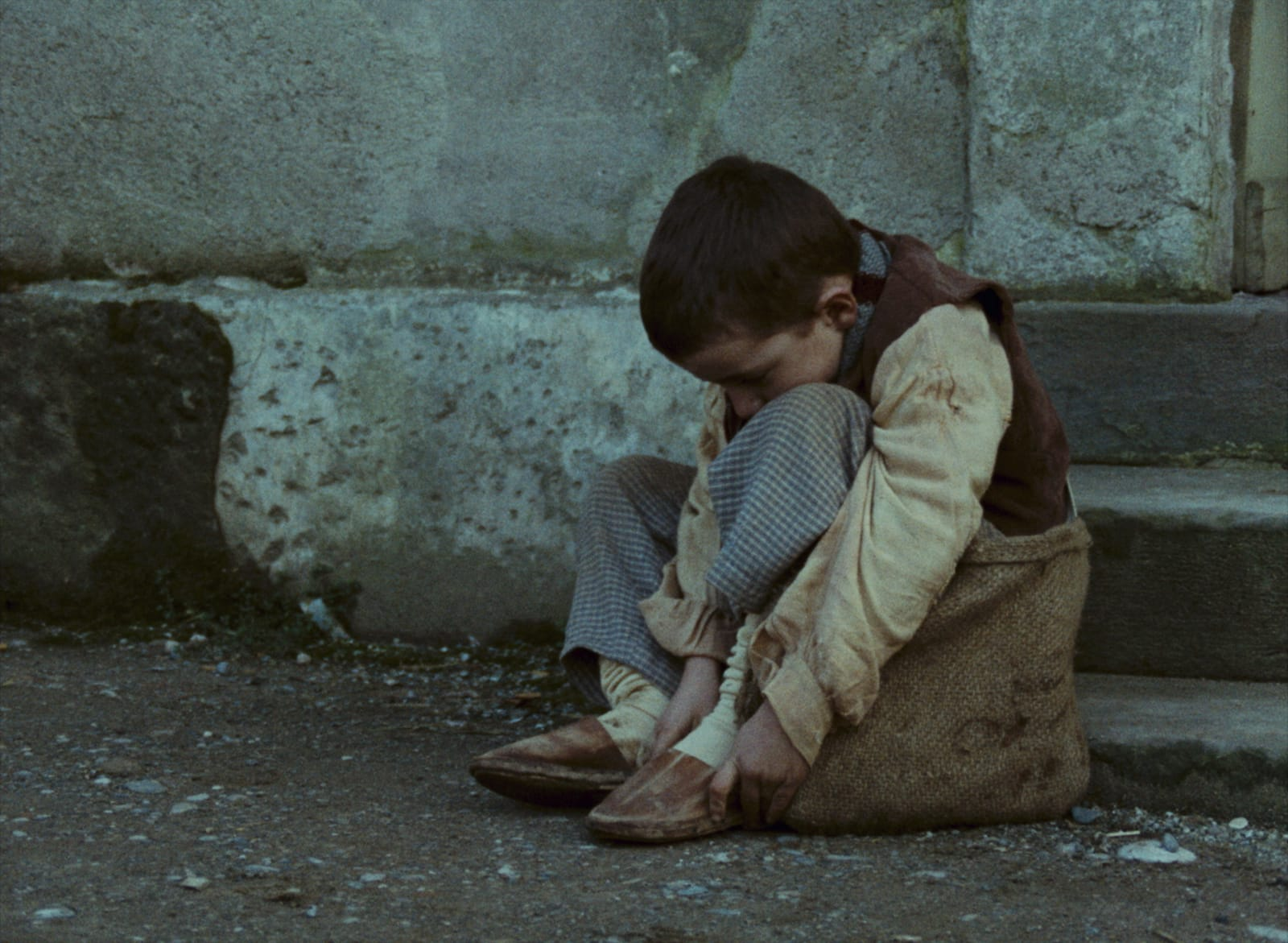
When I first saw The Tree of Wooden Clogs, a masterpiece by Ermanno Olmi, I was staggered to see that this, right here, was where Alice Rohrwacher had drawn so much of her inspiration for her work, particularly her wonderful Lazzaro Felice. Rohrwacher had, perhaps, refined Olmi’s style, and taken it a little further in terms of narrative, adding magic-realist elements that gave a great wallop to her story, and made it so piercingly beautiful and enigmatic, spiritual even. By contrast, The Tree of Wooden Clogs itself is resolutely earthbound, and slow and painstaking; but when I was able to tease out the singularity of that voice, and dwell for a moment with these peasant figures and their stories, filmed with such rich austerity, such understanding, I found that that particular style illuminated not just Rohrwacher’s work, but The Tree of Wooden Clogs itself, because I was able to subtract the later touches, and really dig down into what made this film so much itself. I saw how truly original it was, how indebted to non-cinematic forms Olmi had been – to literature, to painting – and in this way, I found that the film itself breathed even more loudly, like the deep huffing of a horse in a barn, living completely once more.
Send your questions anonymously to Caspar at this link, no personal information is collected.