On Emerald Fennell's Wuthering Heights (2026)
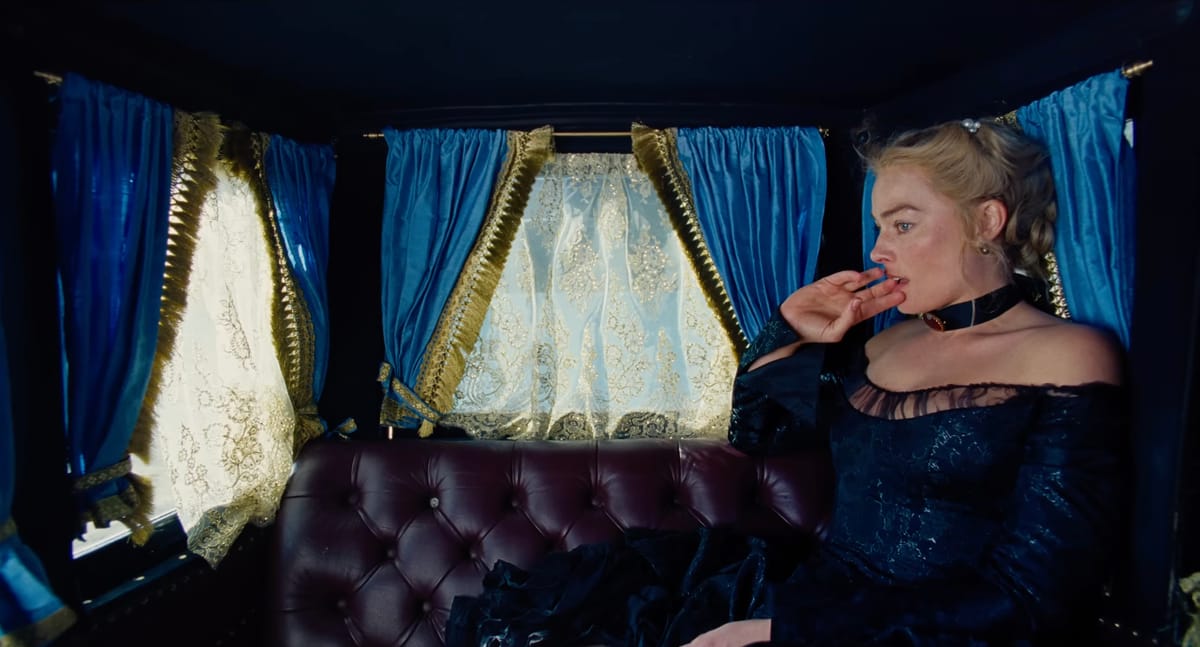
Should a film necessarily be faithful to the book or prior work that it’s adapting? The big of brain and hot of take were out in force, around the time of the release of “Wuthering Heights” , to argue for either side of the motion, thereby leading our culture to be greatly enriched. Heartfelt thanks to anybody who dusted off their front-facing camera in those heady days, and started a video with the hallowed words, “OK so let me tell you why…”
Of course, total adherence to the work in question is a dead-end. Some years ago, I went to see Spike Jonze’s Where The Wild Things Are with friends. Afterwards, someone was quibbling about some element that hadn’t made it from book to screen, whereupon another friend – a little impatiently perhaps – snapped, “Well, yeah, and there also wasn’t a finger turning the pages.” It goes without saying that a filmmaker must take some liberties with a text in bringing it to the screen. This is not just a self-evidently necessary process in making prose fit to a different medium and tailoring a story so that it can be apprehended visually, but an intrinsic part of the creative process, whereby artists put their own imprint on something. For a few good examples of this, you only have to listen to the original version of anything covered by Aretha Franklin and then her own version, in which she usually changes the very musical fabric of the song and sometimes even its meaning. The most famous example of this is obviously her imperious cover of Otis Redding’s “Respect”, which in its original iteration is essentially a low-down appeal from a man for, god damn it, a bit of sex when he gets home after a hard day at work; Aretha vamps it up and turns the song into a righteous demand for actual respect. In a similar vein I recommend her much less well-known take on “My Way”, a brilliant performance in which she strips most of Sinatra’s rancid vainglory from the song, and turns it into something generous, encouraging, celebratory.
Are these adaptations – for that is what they are – faithful to the spirit of the original, and does that matter? Well, whatever tweaks Franklin makes to the o.g., in each cover you can hear that she’s adopted the same melody at least; the tune stays broadly the same, and there are even touches that seem to enter into a really fruitful, crunchy kind of dialogue with the former versions, teasing out their qualities or foibles in illuminating ways. Emerald Fennell’s “Wuthering Heights” doesn’t sing the same tune as the book by Emily Brontë; it doesn’t contain the chorus, and there are whole parts where the film just goes “la la la la la”. Fennell has as good as admitted this, stating that the quotation marks around the title are an indication that this is her own personal spin on the novel, and not an authoritative transposition. Well, quite. Quoth Fennell: “I wanted to make something that was the book that I experienced when I was 14” – adding that her own amendments to the text are things she had remembered from the novel as a teenager, in her own fantasies of that world, but which turned out not to have been in it. I don’t wish to be unkind, but is there anyone whose perspective on the world at the age of 14 is worth engaging with? Remembering my own thoughts and utterances at 14 makes me want to bite my own arm off, and that is as things should be.